4th of July Sensory Flag Craft for Kids (That Even Toddlers Will Love)
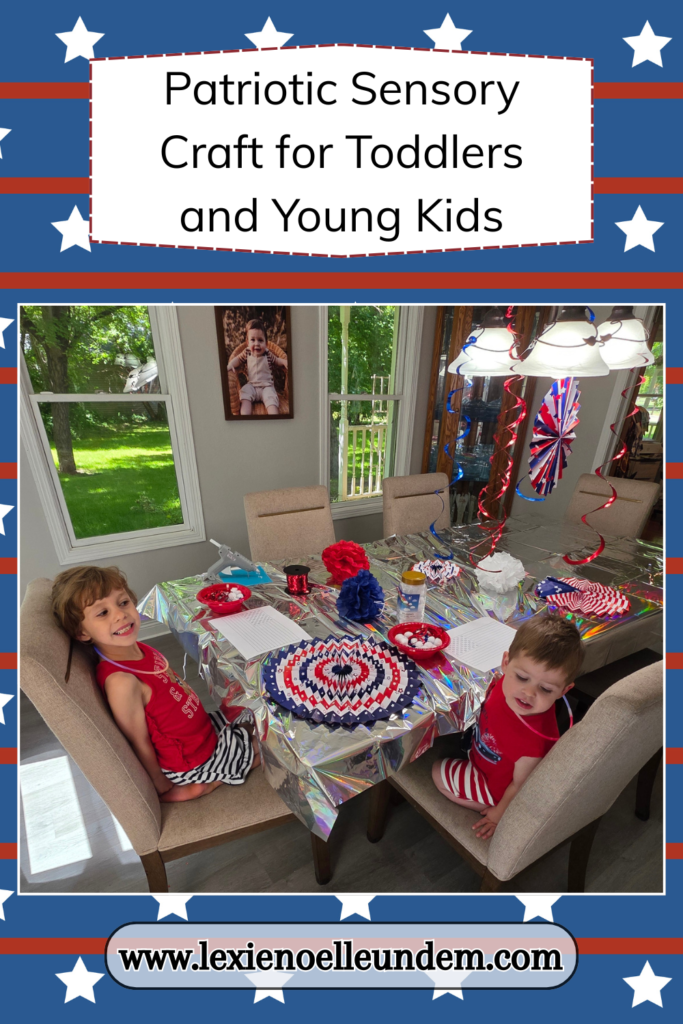
Can I be honest with you for a second? I did not have high hopes for this one. I had visions of red, white, and blue chaos all over my kitchen table, Camden screaming because something felt weird on his hands, and Carolynn abandoning the whole project halfway through to go do a puzzle.
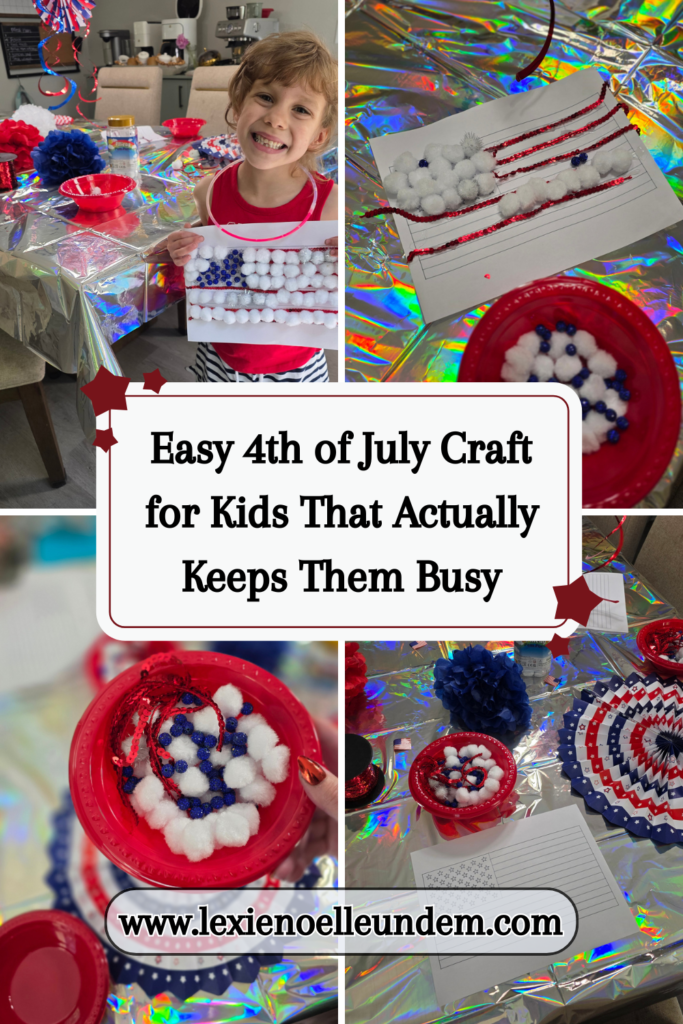
But this 4th of July sensory flag craft? It actually worked. Like, both kids stayed engaged, nobody cried (well, Camden did because of the glue, but he recovered), and we ended up with two little American flags that are currently hanging up like we planned it all along.
This craft is genuinely perfect for toddlers and young kids because it gives them so many different textures to explore. Soft, bumpy, fluffy, smooth. It checks all the boxes for a sensory craft for kids, and it sneaks in some early learning about colors and patterns without anyone noticing. Win.
Carolynn, who is 6 and has ADHD, loved being able to make her flag her own. She asked if she could add extra beads and I said yes because honestly, why not? Camden, who is almost 3, did not love the glue situation (he looked at me like I had personally offended him), but he was absolutely obsessed with the fuzzy cotton balls and spent a solid 10 minutes just squishing them before we even started.
Let me walk you through exactly how we made these so you can do it too, hopefully with fewer suspicious looks from your toddler.
What Is a Sensory Craft for Kids?
Before we dive in, I want to quickly explain why I keep calling this a sensory craft, because it actually matters beyond just sounding fancy.
A sensory craft for kids is any hands-on project that intentionally engages multiple senses, usually touch, sight, and sometimes sound. For toddlers and young kids, sensory play is a huge part of how they learn and process the world around them. It supports fine motor development, builds focus, and honestly just keeps little hands busy in a way that feels good for their brains.
For kids with ADHD like Carolynn, sensory crafts are especially valuable. The variety of textures keeps things interesting and helps hold attention longer than a single-texture project would. Different materials give the brain something new to process every few minutes, which is basically ADHD-friendly by design.
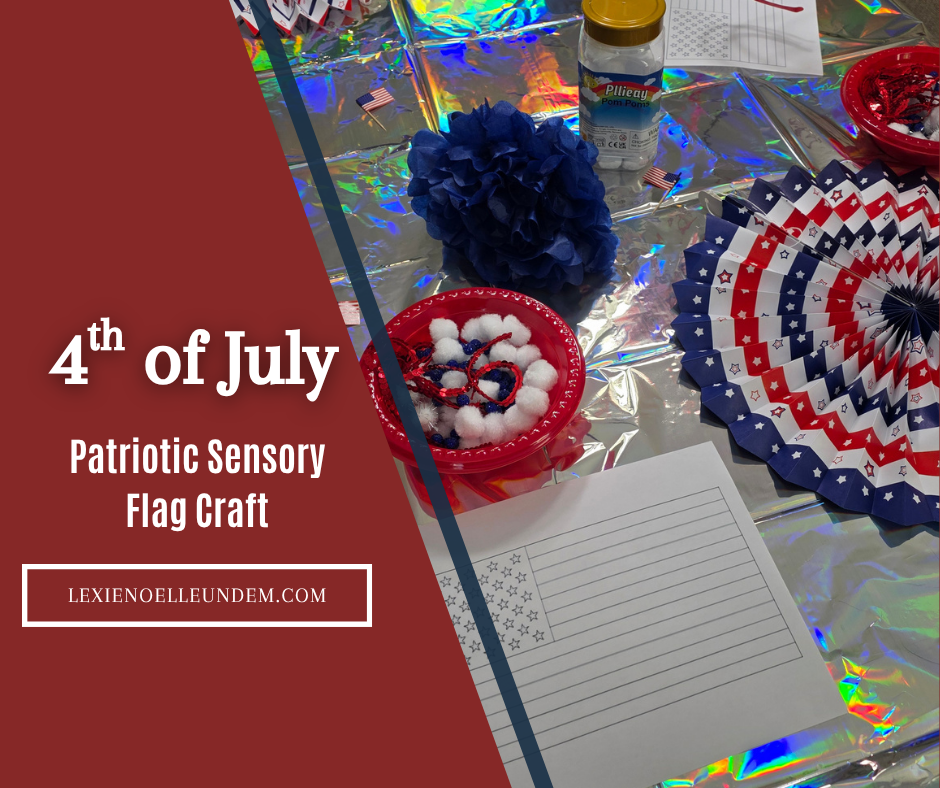
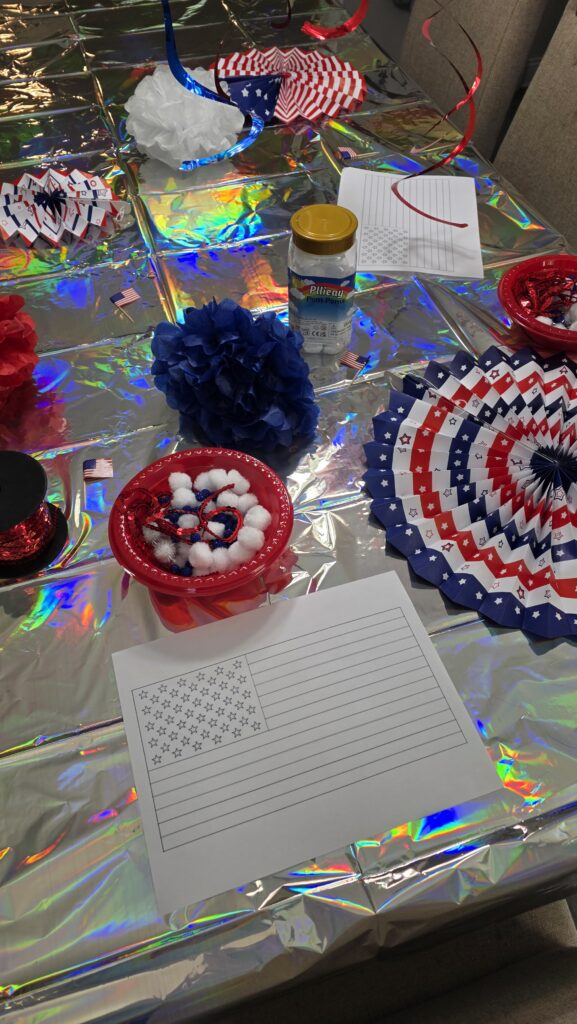
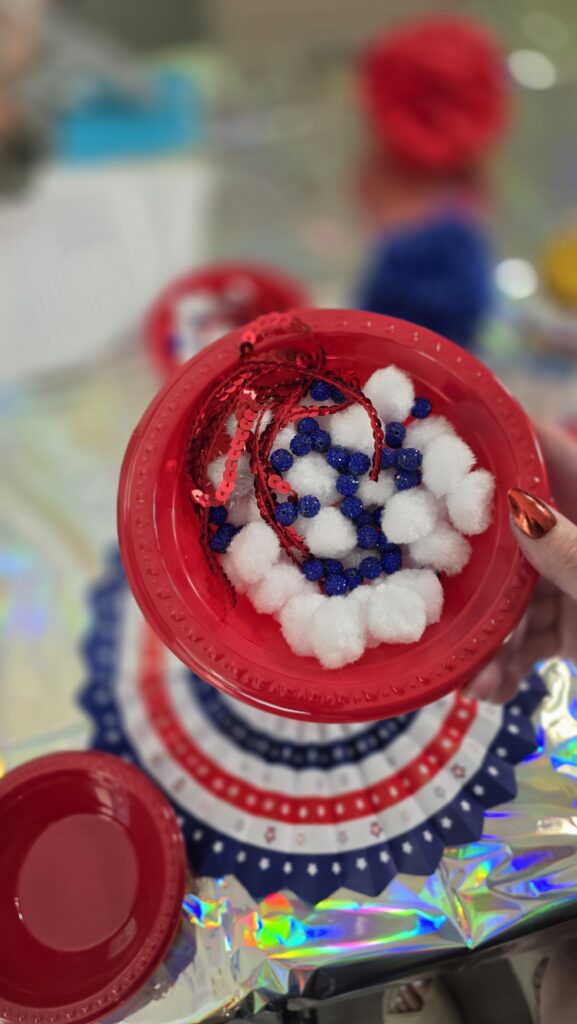
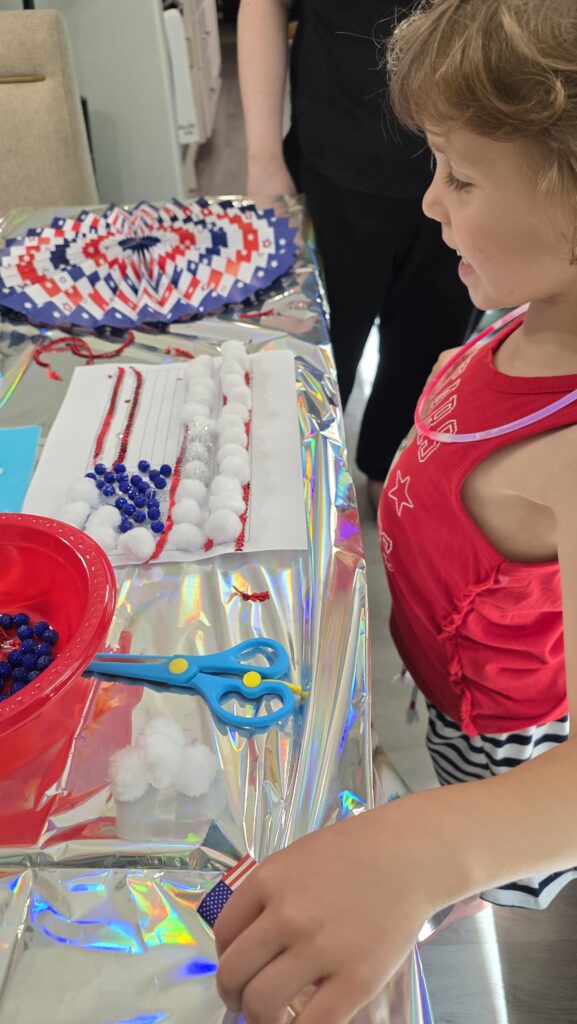
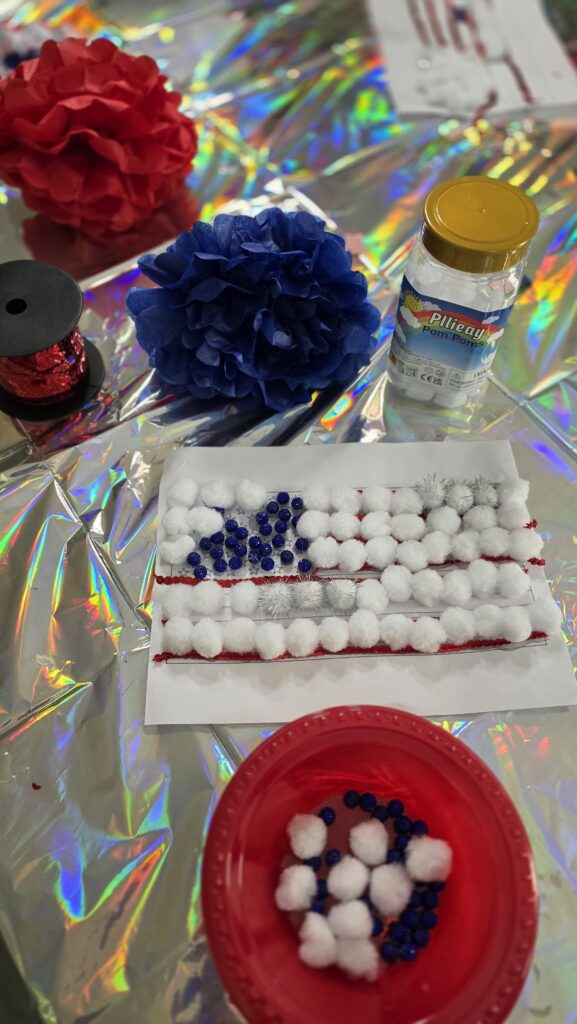
This flag craft uses several different materials on purpose. We have smooth paper, sequined red ribbons, soft cotton balls, and sparkly blue beads. Each one feels different, and that variety is exactly what makes this a great sensory activity rather than just a regular art project.
What You Will Need
The supply list here is short and almost everything can be found at a dollar store. I ordered most of mine off of Amazon and they were delivered within the week.
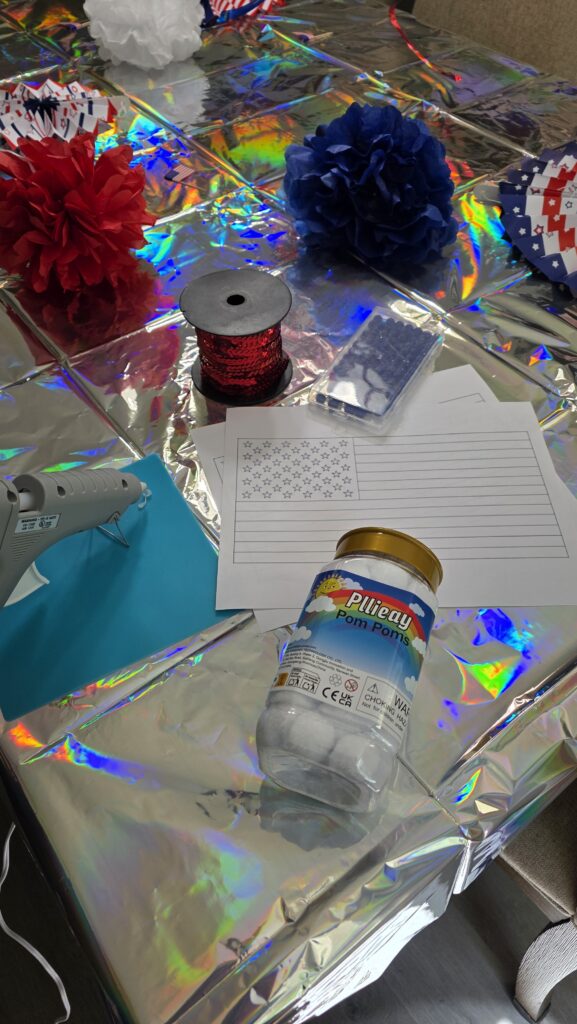
Supplies for Each Flag:
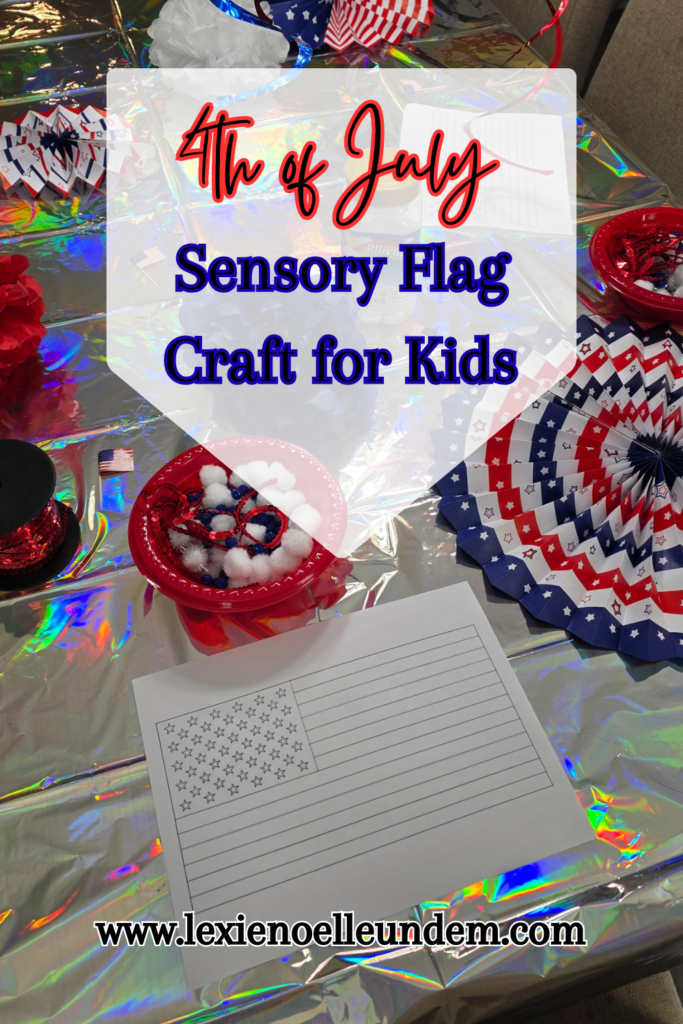
- 1 piece of paper or white foam board or thick cardstock (approximately 8×10 inches) to attach a flag outline to
- White cotton balls (the fluffy round kind, not the flat oval ones)
- Star stickers, beads, sequin ribbon, red pipe cleaners, etc.
- Hot glue (with assistance), white school glue or rubber cement
- Optional: a popsicle stick or wooden dowel for the flag pole
- Optional: a small paintbrush for spreading glue if your child dislikes touching it
- Tape or a glue gun (for adult use only) to attach the stick
- Scissors (adult handles cutting for younger kids)
A note on the glue: if you have a sensory-sensitive kiddo like Camden, keep a small paintbrush nearby so they can spread the glue without touching it directly. This was a total game changer for us.
How to Make the 4th of July Sensory Flag Craft Step by Step
Step 1: Prep Your Materials Before the Kids Sit Down
Trust me on this one. Cut your paper strips or sequin ribbon ahead of time. Set out the cotton balls and beads in a little bowl. When everything is already sorted and ready, the craft flows so much better and you spend less time managing chaos and more time actually enjoying it with your kids.
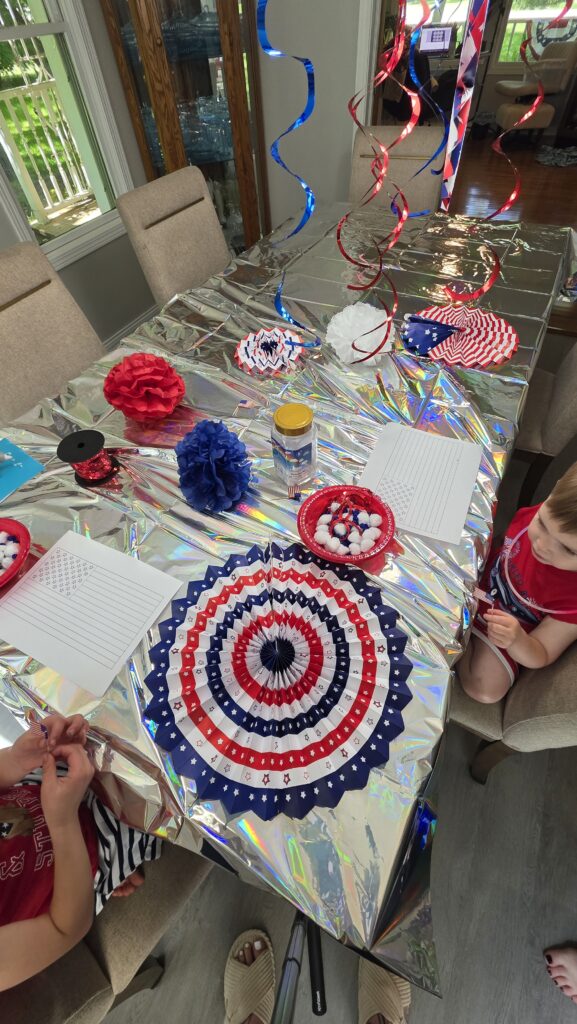
I also lay down a vinyl tablecloth before any craft in this house. My kids can create chaos like nobody’s business.
Step 2: Create the Red and White Stripes
The American flag has 13 stripes, alternating red and white. For kids, we simplify this a little bit. You do not need to be exact. The goal here is the sensory experience and the general look of a flag, not a historically accurate replica.
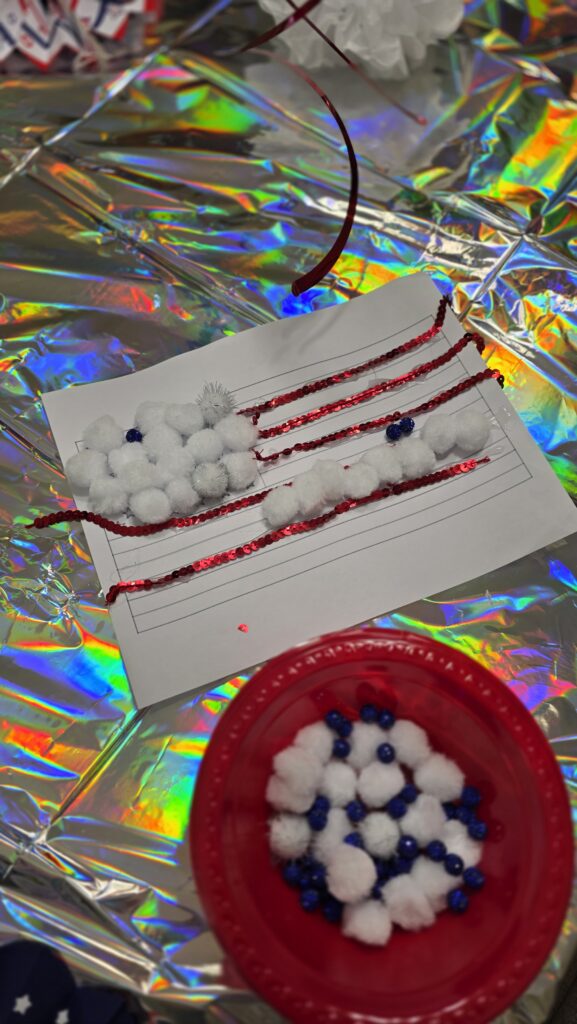
Carolynn placed her ribbon with total confidence. Camden used the cotton balls and was very eclectic with his placement. If he had it his way, the whole flag would have been cotton balls.
Additional Options
Step 3: Add the Blue Star Field
Cut a rectangle of blue construction paper or foam and glue it to the upper left corner of your flag. This becomes the canton, which is the official name for that blue section. You can mention that to your kid and they will either find it fascinating or completely ignore you. Both are valid responses. Let your child place star stickers or beads onto the blue section.
Step 4: Attach the Flag Pole
Once the glue has dried (give it at least 20-30 minutes, or distract the kids with a snack), use a glue gun or strong tape to attach a popsicle stick or wooden dowel to the back left edge of the flag. Adults should handle the glue gun step.
Now your child has a flag they can hold and wave around and play with.
Tips for Making This Craft Go Smoothly
For Toddlers
- Keep the session to 15-20 minutes maximum. Toddler attention spans are short and that is completely normal.
- Let them lead the placement of materials. It does not need to look perfect. The process is more important than the product at this age.
- Have a wet rag or wipes within arm’s reach at all times. You already know why.
- If they hate the glue, use the paintbrush trick. It works.
For Young Kids and Toddlers with ADHD
- Give them choices throughout the craft. Do you want cotton balls on this stripe or ribbon? That sense of control helps with engagement.
- Break the steps into small, clear chunks. Do one step, pause, celebrate. Then move on.
- Have a fidget or small sensory item nearby for moments when they need a quick reset.
- Let them personalize. Extra beads, different color placement, whatever makes it theirs. Ownership increases investment.
Common Mistakes to Avoid
- Using too much liquid glue: A little goes a long way. Too much glue makes materials slide around and takes forever to dry, which is torture when you have impatient kids watching it.
- Rushing the drying time: I know, I know. But if you try to attach the pole before the glue dries, everything falls apart and someone cries. Usually me.
- Making it too complicated: The simplified version of the flag is completely fine. You do not need 50 stars. You do not need exactly 13 stripes. A flag that looks like a flag is a success.
- Skipping the prep step: Setting up materials in advance seriously makes this so much easier. Five minutes of prep saves fifteen minutes of mid-craft scrambling.
Why This Craft Is Great for Different Learning Styles
One of my favorite things about this particular sensory craft for kids is that it naturally accommodates different ways of learning and engaging. Kids who are tactile learners get all the texture exploration. Kids who are visual learners get the bright red, white, and blue colors and the recognizable image of a flag. Kids who need movement can wave their finished flag around the room.
For kids with ADHD specifically, the variety of textures and steps keeps the activity fresh enough to hold attention without being so complex that it becomes frustrating. That sweet spot is honestly hard to find in craft projects, and I was genuinely thrilled that this one landed there.
It also opens up a really natural conversation about the 4th of July, what the flag represents, what the colors mean. Carolynn asked me why the flag has stars and we ended up talking about the states for a few minutes. Accidental learning is the best learning.
Frequently Asked Questions About Sensory Crafts for Kids
What age is a sensory craft for kids appropriate for?
Sensory crafts for kids are appropriate starting around age 18 months with close supervision. Toddlers as young as 2 can participate in simple sensory crafts with adult help, while preschoolers ages 3 to 5 can do most steps independently. This flag craft works well for ages 2 through 7 with adjustments for each age level.
Can I make this craft safe for kids with food allergies?
Yes, absolutely. Standard school glue and craft supplies do not typically contain common food allergens like dairy or eggs. However, always check labels on specific products if your child has severe contact allergies. For Camden, who has multiple food allergies, we used regular school glue and craft foam with no issues. When in doubt, contact the manufacturer directly.
How do I keep a toddler engaged during a craft activity?
The best way to keep a toddler engaged during a craft is to limit the session to 15 to 20 minutes, offer materials with lots of different textures and colors, and give them as much independence as is safely possible. Do not worry about the finished product looking perfect. The exploration and process are what matter most for toddlers. Short, fun, and low-pressure is always the right approach.
What if my child hates touching certain textures?
That is completely valid and very common, especially in kids who are sensory-sensitive. Offer tools like paintbrushes, tongs, or craft sticks so your child can engage with materials without direct hand contact. Never force a child to touch something that causes distress. The goal of sensory play is to explore, not to push past genuine discomfort. Slow, gentle exposure over time is always better than forcing the experience.
What are the developmental benefits of sensory crafts for preschoolers?
Sensory crafts for preschoolers support fine motor skill development, hand-eye coordination, color and texture recognition, and early creativity. They also build focus and attention, which is especially beneficial for kids with ADHD. The tactile stimulation from materials like cotton balls and pipe cleaners helps develop neural pathways related to touch processing, which supports overall sensory integration as children grow.
Wrapping It Up
This 4th of July sensory flag craft is genuinely one of my favorite things we have made this summer. It was simple enough that I did not stress out about it, engaging enough that both my kids actually stuck with it.
Carolynn’s flag probably has 30 beads (but who’s counting) and she is very proud of it. Camden’s flag has as many cotton balls as he had the attention to put and lots of ribbon strips. I love them both equally and unconditionally, just like their creators.
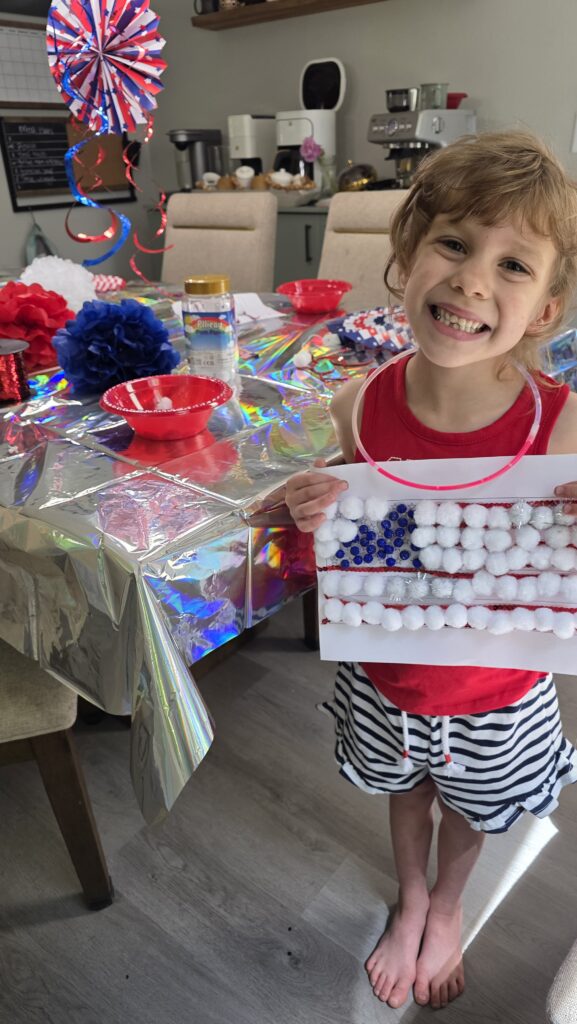
If you try this craft with your own kids, I would love to see it. Come share your photos over on Instagram or drop a comment below. And if you have a sensory-sensitive kiddo who made it work, tell me about the paintbrush trick. It deserves more hype than it gets.
You Might Also Like…
Save These Pins For Later!